

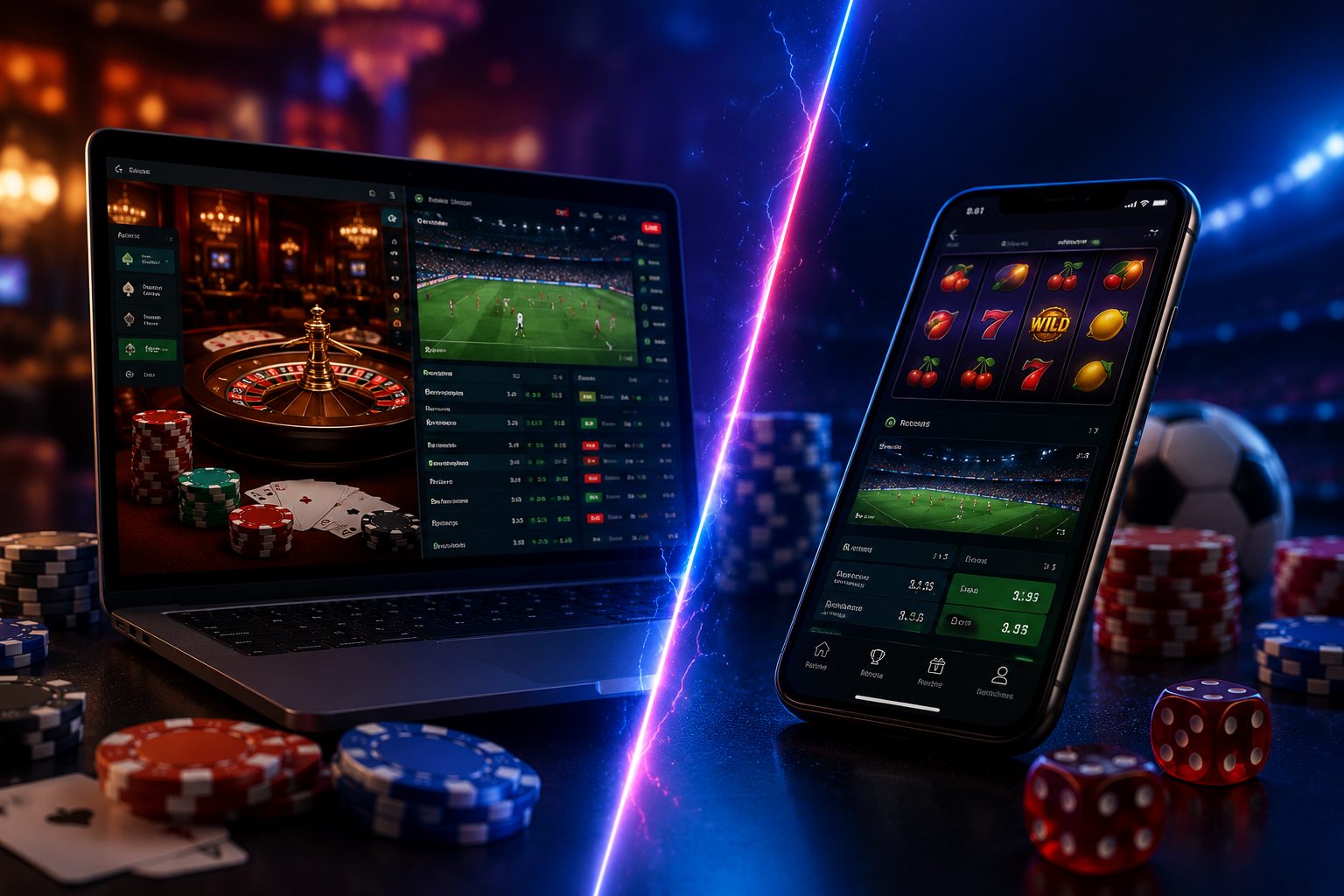
Mobile vs Desktop Gambling: UI, Features, and Best Practices
Online gambling has changed dramatically over the past decade, and much of that transformation has been driven by mobile technology. What was once an experience built almost entirely around desktop computers has become increasingly centered on smartphones and tablets. That shift has happened even faster because mobile internet usage dominates daily digital behavior.
Today, many players place bets through mobile casino apps while commuting, watching sports, or relaxing at home. Sportsbooks send real-time betting notifications directly to smartphones, and online casinos optimize interfaces specifically for touchscreens and smaller displays. At the same time, desktop gambling still maintains important advantages, especially for players who prioritize detailed analysis, multitasking, or immersive gameplay.
The debate between mobile vs desktop gambling isn’t simply about screen size anymore. It now involves user interface design, payment integration, responsiveness, security, performance optimization, and even gambling psychology. Different devices shape how players interact with betting platforms, how quickly they place wagers, and how long their sessions last.
Understanding these differences matters because the quality of the gambling experience often depends on choosing the right platform for the right activity. Some games naturally work better on mobile, while others benefit heavily from desktop layouts and larger displays.
This guide explores how mobile and desktop gambling compare across UI, features, usability, security, and player behavior while examining the best practices modern gambling platforms use to optimize both experiences.
How Mobile Gambling Changed the Online Casino Industry
The rise of mobile gambling fundamentally reshaped how online casinos and sportsbooks design their products. In the early years of online betting, desktop websites were the primary focus because smartphones lacked the performance and internet speeds required for smooth gameplay. Casino platforms were designed around large monitors, mouse navigation, and lengthy user sessions.
That changed once smartphones became more powerful and the mobile internet became faster and cheaper. Operators quickly realized that players no longer wanted to sit at a desk to place bets. Gambling behavior became more spontaneous, shorter in duration, and heavily integrated into everyday routines.
Why Operators Shifted to Mobile-First Design
Modern gambling operators increasingly use mobile-first design strategies. This means interfaces are designed for smartphones first and later expanded for desktops rather than the reverse.
There are practical reasons behind this approach. Mobile users now represent the majority of traffic for many gambling platforms. Operators therefore prioritize:
- Fast loading times
- Simplified menus
- One-thumb navigation
- Compressed layouts
- Minimal friction in deposits and withdrawals
This shift also affected game providers. Slot developers now build games vertically or responsively to fit smaller screens without sacrificing usability. The result is that mobile gambling no longer feels like a secondary version of desktop gambling. In many cases, it has become the primary experience.
Mobile vs Desktop Gambling: Core Experience Differences
Although both platforms provide access to the same casino games and betting markets, the actual user experience differs significantly depending on device type. These differences influence not only comfort and convenience but also player behavior, betting patterns, and decision-making.
Screen Size and Interface Layout
Desktop gambling still offers a major advantage in visual space. Larger displays allow sportsbooks and casinos to present more information simultaneously without overcrowding the interface. Sports bettors, for example, benefit from being able to view multiple matches, detailed statistics, live odds movement, betting slips, and livestreams all at the same time.
On mobile devices, interfaces must compress this information into smaller layouts. This often requires:
- Hidden menus
- Expandable tabs
- Swipe navigation
- Reduced visible data
Well-designed mobile casino UI systems manage this carefully, but weaker designs can feel cluttered or confusing.
Navigation and Betting Speed
Mobile betting can actually feel faster in many situations because smartphones remove physical barriers between the user and the platform. Players can instantly unlock devices, open apps, place wagers, and deposit funds within seconds. This speed is especially valuable during live sports betting, where odds constantly change.
Desktop interfaces, however, often support more deliberate decision-making because larger screens encourage longer viewing sessions and deeper analysis.
Session Length and User Behavior
Behavioral studies consistently show that mobile gambling sessions tend to be shorter but more frequent. Desktop users often engage in longer poker sessions, detailed sportsbook research, and extended live casino play.
Meanwhile, mobile users commonly place quick bets, spin slots casually, check promotions frequently, and engage in microbetting. This difference matters because operators optimize interfaces around expected user behavior.
Multitasking and Multi-Window Limitations
Desktop gambling remains superior for multitasking. A desktop user can watch multiple games, compare odds across bookmakers, open betting calculators, follow statistics websites, and stream live matches simultaneously.
Mobile devices struggle with this level of multitasking due to screen limitations. Even split-screen functionality rarely matches desktop efficiency for serious bettors.
Casino UI and UX: Why Design Matters More Than Most Players Realize
Casino UI and UX directly affect how players interact with gambling platforms, yet many users underestimate how influential interface design really is. A poorly designed interface increases friction, slows navigation, and creates confusion during betting. Strong UX design makes gameplay feel smooth, intuitive, and immersive.
Touchscreen Optimization
Mobile casino interfaces must account for finger-based interaction rather than mouse precision. Buttons need proper spacing, adequate sizing, and responsive feedback because accidental taps can easily occur on smaller screens.
Well-designed mobile sportsbooks also position betting controls within natural thumb reach zones. This improves comfort during long sessions.
Bet Slip Design and Navigation Hierarchy
The bet slip is one of the most important components of sportsbook UX. Strong mobile betting interfaces simplify odds selection, stake entry, payout visibility, and confirmation flow without overwhelming the player.
Poorly designed bet slips create unnecessary friction and increase the likelihood of user errors. Desktop sportsbooks often support more advanced layouts because they have additional space for statistical overlays and expanded market displays.
Visual Clutter and Cognitive Load
Many casino apps overload users with animations, promotions, banners, and pop-ups. This creates cognitive overload, especially on smaller mobile displays where visual space is limited. The best gambling UI systems reduce unnecessary distractions and prioritize clarity instead of excessive visual stimulation.
Dark Mode, Animations, and Accessibility
Dark mode has become increasingly common in gambling apps because it reduces eye strain during extended sessions. Accessibility improvements also matter more than many operators realize. Features such as scalable text, high contrast layouts, simplified navigation, and reduced motion settings can significantly improve usability across different player demographics.
Mobile Casino Experience by Game Type
Different gambling categories behave very differently across mobile and desktop environments. This is one area where many comparison articles remain overly simplistic.
Slots on Mobile vs Desktop
Slots adapt extremely well to mobile devices because gameplay is naturally simple and repetitive. Most modern slot games use vertical optimization, responsive scaling, and touch-friendly spin controls. This makes mobile slots highly accessible and easy to play casually.
Desktop still provides more immersive visuals, particularly for cinematic slots with detailed animations, but mobile performance has improved dramatically over recent years.
Live Casino on Mobile
Live dealer games create more technical challenges on mobile because they require stable internet, low latency, and high-quality video streaming. Smaller screens can also make table information harder to view.
Desktop systems often provide a stronger live casino experience because users can monitor multiple tables, view dealer interactions clearly, and follow side bets more comfortably. Still, mobile live casinos continue improving as smartphones become more powerful.
Sportsbook Mobile Experience
Sports betting arguably benefits more from mobile optimization than any other gambling category. Live betting depends heavily on speed and accessibility. Mobile sportsbooks allow users to react instantly to match events, monitor odds changes, and cash out quickly. Push notifications also keep users engaged throughout sporting events.
Poker and Multi-Tab Gambling
Desktop poker remains dominant among serious grinders because multitabling is far easier on larger displays. Professional and semi-professional poker players often use HUD software, multiple tables, and statistical tracking tools, which function far better on desktop systems.
Mobile poker works well for casual sessions but still struggles to replicate advanced desktop workflows.
Crash Games and Fast Betting Interfaces
Crash games thrive on mobile because rounds are extremely fast and interfaces are relatively lightweight. These games align naturally with short mobile gambling sessions and quick interaction cycles. Simple controls and minimal loading times also make crash games highly compatible with lower-end Android devices common in the market.
Gambling App Features That Improve User Experience
Modern gambling apps increasingly compete through feature quality rather than just game libraries.
Push Notifications and Real-Time Odds
Push notifications keep users informed about:
- Live betting opportunities
- Bonus offers
- Odds boosts
- Match reminders
However, excessive notifications can also contribute to impulsive betting behavior if not managed responsibly.
Biometric Login and Security
Biometric authentication significantly improved mobile casino security. Fingerprint and facial recognition systems reduce friction while enhancing account protection. Users no longer need to repeatedly enter passwords during sessions. This balance between convenience and security became a major advantage for mobile gambling apps.
GCash, Maya, and Mobile Wallet Integration
Mobile wallet integration transformed gambling payments. Platforms supporting GCash, Maya, and QR-based payments often provide faster deposits and withdrawals than traditional banking methods. This also aligns naturally with mobile gambling behavior because users can manage betting funds directly from smartphones without switching devices.
Offline Optimization and Data Efficiency
Not all users have consistent high-speed internet connections. Efficient gambling apps therefore optimize compressed graphics, adaptive streaming, lightweight interfaces, and low-data modes to improve performance under weaker network conditions.
Desktop Gambling Advantages That Still Matter
Despite mobile dominance, desktop gambling still offers several major advantages that remain difficult to replicate on smartphones.
Large Displays and Data Visibility
Desktop layouts provide better visibility for:
- Detailed statistics
- Multiple betting markets
- Complex game interfaces
- Analytical tools
This becomes particularly valuable for advanced sports bettors.
Advanced Sports Betting Analysis
Serious bettors often prefer desktop environments because research workflows are easier to manage. A desktop setup allows simultaneous access to:
- Analytics platforms
- Injury reports
- Line movement trackers
- Livestreams
- Betting exchanges
This creates a more strategic environment compared to the compressed nature of mobile interfaces.
Streaming and Live Statistics
Desktop devices generally deliver more stable streaming quality, especially during long live casino sessions or sports broadcasts. The larger viewing area also improves immersion and readability.
Multiple Windows and Simultaneous Betting
Desktop users can comfortably monitor multiple operators at once. This is valuable for:
- Line shopping
- Arbitrage betting
- Comparing promotions
- Multi-event tracking
Mobile devices simply cannot replicate this experience effectively.
Mobile Casino Security and Responsible Gambling Concerns
The convenience of mobile gambling introduces both security benefits and behavioral risks.
Public Wi-Fi Risks
Many users gamble on mobile devices while connected to public networks in cafes, malls, or transportation hubs. This increases exposure to unsecured connections, phishing attacks, and account interception risks. Players should avoid financial transactions on unsecured public Wi-Fi whenever possible.
Biometric Authentication
Biometric security helps reduce unauthorized account access, especially if devices are lost or stolen. However, users still need strong passwords, two-factor authentication, and trusted app downloads to maintain full account security.
Impulse Betting and Accessibility Risks
Mobile gambling creates an environment where betting becomes constantly accessible. This can increase impulsive wagering, emotional betting, and excessive session frequency because users carry gambling platforms in their pockets at all times.
Responsible gambling tools, therefore, become increasingly important in mobile-first environments.
Responsible Gambling Tools
Strong gambling platforms now include:
- Deposit limits
- Session reminders
- Self-exclusion tools
- Reality checks
- Cooling-off periods
These features are especially important on mobile devices, where betting behavior can become highly reactive.
Best Practices for Mobile and Desktop Gambling

Choosing between mobile and desktop gambling should depend on the activity rather than personal preference alone.
Choosing the Right Device for the Right Game
Certain activities naturally suit different platforms.
Mobile works particularly well for:
- Slots
- Live betting
- Crash games
- Casual wagering
Desktop often performs better for:
- Poker multitabling
- Statistical sports betting
- Extended live casino sessions
- Research-heavy betting strategies
Understanding this distinction can significantly improve the overall experience.
Optimizing Battery, Connectivity, and Performance
Live gambling applications consume substantial battery power, processing resources, and mobile data. Players should use stable internet connections, monitor device temperature, and close unnecessary background apps to maintain smooth gameplay.
Managing Notifications and Distractions
Push notifications should be customized carefully. While they improve convenience, excessive alerts can encourage unnecessary betting activity and interrupt focus.
Setting Gambling Limits Across Devices
Cross-device gambling makes it easier to lose track of time and spending. Players should maintain consistent deposit limits, bankroll tracking, and session management across both desktop and mobile platforms.
The Future of Mobile Gambling and Cross-Platform Casino Design
The gap between mobile and desktop gambling continues to shrink as technology evolves. Cloud-based gaming, adaptive interfaces, and synchronized ecosystems are increasingly allowing players to move seamlessly between devices.
Cloud Gaming and Instant Play Casinos
Many operators are reducing dependence on downloadable apps by expanding instant-play browser technology. This allows users to switch devices without reinstalling software or sacrificing performance.
AI Personalization and Adaptive Interfaces
AI-driven gambling platforms increasingly personalize promotions, layouts, recommendations, and betting suggestions based on user behavior. This personalization may improve convenience, but it also raises ethical questions surrounding behavioral targeting and responsible gambling.
Cross-Device Synchronization
Modern casino ecosystems increasingly synchronize wallet balances, betting history, active wagers, and loyalty rewards across mobile and desktop systems. This creates smoother user experiences while encouraging stronger long-term engagement.
Frequently Asked Questions
Is mobile gambling safer than desktop gambling?
Both can be safe if users choose licensed operators and follow strong security practices. Mobile apps often include biometric login protection, while desktop platforms may provide stronger browser security controls. The biggest risks usually come from unsecured public networks and unverified gambling sites rather than the device itself.
Are gambling apps better than browser casinos?
It depends on user preference and device performance. Gambling apps typically offer faster loading times, smoother notifications, and better mobile optimization. Browser casinos, however, provide easier cross-device access without requiring downloads or updates.
Why do sportsbooks prioritize mobile users?
Sports betting behavior naturally aligns with mobile usage. Players want instant access during live events, quick cash-out functionality, and real-time betting opportunities while watching matches or traveling.
What games work best on mobile gambling apps?
Slots, crash games, and live sports betting generally perform extremely well on mobile devices because they rely on quick interactions and simplified interfaces. Poker and advanced statistical betting still benefit more from desktop environments.
Does mobile gambling use a lot of data?
Standard slots and sportsbook browsing use relatively little data. Live casino games and HD sports streaming consume significantly more bandwidth because they rely on continuous video feeds.
Is Android or iPhone better for gambling apps?
Android dominates the market because of affordability and device availability. Many gambling operators, therefore, optimize heavily for Android compatibility. iPhones generally provide smoother high-end performance, but modern Android devices now offer strong gambling experiences as well.

Simon Yates is a seasoned iGaming professional with 18 years of experience building iGaming and Fintech products, including Casino, Sportsbook, Poker, Bingo, Social Gaming, and broader financial technology solutions.
Throughout his career, he has developed deep expertise across product development, marketing, operations, strategic planning, and business relationship management. Simon brings a strong commercial mindset combined with hands-on operational experience, enabling him to scale products, optimise performance, and build sustainable partnerships within highly competitive markets.