

A Beginner’s Guide to Table Games
Table games are where casinos stop being passive and start demanding decisions. Slots run on autopilot. Table games don’t. Every move you make has consequences, whether you understand them or not.
If you’re new to casino gaming, table games can feel intimidating at first. With cards, chips, dealers, and other players watching you, it’s a different environment entirely. But once you understand how these games actually work beneath the surface, they become far more approachable and, in many cases, far more rewarding than slots.
This guide breaks everything down in a way that actually prepares you to play. Not just rules, but how decisions affect outcomes, where beginners go wrong, and how to avoid losing money faster than you should.
What Are Table Games in Casinos?
Table games are casino games played against a dealer or other players on a physical or virtual table. Unlike slots, which rely entirely on random number generators, table games involve structured rules and decision-making.
Games like blackjack, baccarat, roulette, and poker all fall under this category. Each one operates differently, but they share a common foundation. You place bets, the game unfolds based on rules and probability, and your decisions influence the outcome to varying degrees.
The biggest difference between table games and slots comes down to control. In slots, you press a button and hope. In table games, you’re constantly choosing how to play. That doesn’t mean you can control results entirely, but it does mean you can influence your odds.
This is exactly why table games attract players who want more than pure luck. There’s structure, there’s logic, and over time, there’s a clear difference between random play and informed play.
Casino Table Games for Beginners Explained
At first glance, table games look completely different from one another. Cards, wheels, chips, and different rules. But once you strip them down, they all revolve around a few core mechanics. Every table game involves three elements: probability, house edge, and player decisions. Probability determines how likely an outcome is. The house edge ensures the casino makes money over time. Your decisions determine how efficiently you navigate both.
Take blackjack as an example. The house edge can be under 1 percent if you play correctly. But if you make random decisions, that edge increases significantly. That difference is entirely based on player behavior.
Baccarat is different. You don’t make as many decisions, but the house edge varies depending on whether you bet on Banker, Player, or Tie. Roulette pushes things further. The structure of the wheel itself creates the house edge, especially with the presence of zero or double zero.
Understanding these mechanics changes how you approach the game. Instead of guessing, you begin to see patterns in risk, reward, and expected outcomes.
Blackjack

Blackjack is widely considered the best starting point for beginners because it offers the lowest house edge when played correctly. The goal is simple. You’re trying to beat the dealer by getting closer to 21 without going over. But the simplicity ends there. Every decision you make, whether to hit, stand, double down, or split, directly affects your odds.
A beginner mistake is treating blackjack like a guessing game. It isn’t. Every possible situation has a statistically optimal move. For example, if you have 16 and the dealer shows a 10, hitting feels risky. But mathematically, standing is worse over time. This is where basic strategy comes in. It’s not about memorizing random rules. It’s about understanding why certain decisions minimize losses over thousands of hands.
Another issue beginners run into is emotional decision-making. After a losing streak, players tend to chase wins by increasing bets or ignoring strategy. That’s where bankrolls disappear quickly. If you approach blackjack as a structured system rather than a gut-based game, it becomes one of the most controlled environments in the casino.
Baccarat
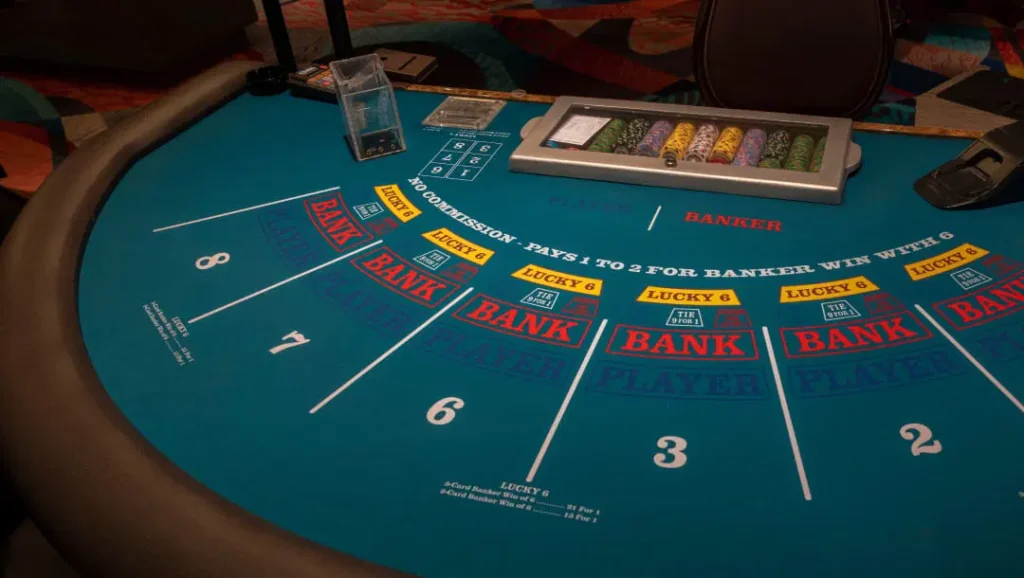
Baccarat dominates in many Asian markets, and there’s a reason for that. It’s simple, fast-paced, and doesn’t require complex decision-making. You’re not playing a hand in the traditional sense. You’re betting on one of three outcomes: Player, Banker, or Tie. The cards are dealt automatically, and the result follows fixed rules.
The key insight most beginners miss is that not all bets are equal. The Banker bet has the lowest house edge, even after accounting for commission. The Player bet is slightly worse, and the Tie bet carries a significantly higher house edge. This is why experienced players almost always stick to Banker or Player bets. The game isn’t about predicting patterns. It’s about consistently choosing the lowest-risk option.
In casinos and online platforms, baccarat is often available in live dealer format, which adds a social element. But the underlying mechanics remain the same. You’re betting on probability, not controlling outcomes.
Roulette
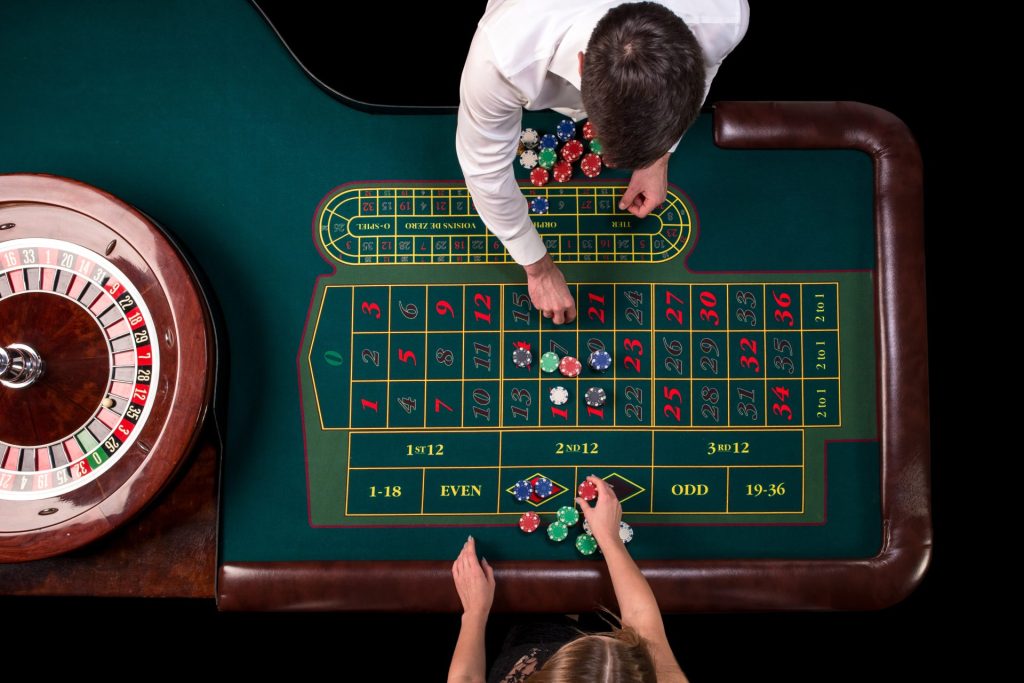
Roulette looks simple because the action is straightforward. A ball spins around a wheel, and you bet on where it lands. But beneath that simplicity is a wide range of betting options with different risk levels. You can bet on single numbers, which offer high payouts but low probability, or you can bet on broader categories like red or black, which offer lower payouts but higher chances of winning.
The critical factor in roulette is the type of wheel being used. European roulette has a single zero, while American roulette includes a double zero. That extra slot significantly increases the house edge.
Many beginners focus on strategies like betting patterns or streak tracking. These don’t change the underlying probability. Each spin is independent, and past results don’t influence future outcomes. The real strategy in roulette comes down to managing risk. Choosing bets that align with your bankroll and tolerance for variance matters far more than trying to predict where the ball will land.
Poker

Poker is fundamentally different from other table games because you’re not playing against the house. You’re playing against other players. This changes everything. Skill becomes far more important than luck over time. While short-term results can vary, experienced players consistently outperform beginners.
Texas Hold’em is the most common version. You’re dealt two cards, and five community cards are revealed in stages. The goal is to make the best possible hand or convince other players to fold. Beginners often lose money because they underestimate how much strategy is involved. Playing too many hands, failing to recognize strong vs weak positions, and ignoring betting patterns are common issues.
Unlike blackjack or baccarat, poker rewards study and experience. The more you understand probabilities, player behavior, and game theory, the better your results become.
Best Table Games for Beginners
If you’re just starting out, some games are more beginner-friendly than others. Blackjack offers the best balance of control and low house edge, but it requires learning basic strategy. Baccarat is easier to pick up and is widely available in local casinos and online platforms. Roulette sits somewhere in between, offering simplicity but higher long-term risk.
The best choice depends on how you prefer to play. If you want minimal decision-making, baccarat is the easiest entry point. If you’re willing to learn and optimize your play, blackjack offers better long-term value.
Online Table Games vs Live Casino Tables
The shift toward online casinos has changed how table games are played. Online table games come in two main forms. RNG-based games use algorithms to generate results instantly. Live dealer games stream real dealers in real time, creating an experience closer to a physical casino.
Many beginners question fairness, especially with RNG systems. Licensed platforms are required to meet strict standards, including regular audits and certified random number generators. Live dealer games add transparency. You can see the cards being dealt or the wheel spinning, which builds trust for new players.
Mobile play is also a major factor. Most platforms are optimized for smartphones, making it easy to access table games anywhere. This convenience changes player behavior, often leading to shorter but more frequent sessions.
How Much Money Should Beginners Start With?
One of the biggest mistakes new players make is starting with the wrong bankroll. Either they bring too little and get wiped out quickly, or they bring too much and play recklessly. A practical starting point is to treat your bankroll as entertainment money. An amount you’re comfortable losing without affecting your finances. From there, divide it into smaller session budgets.
For example, if you set aside ₱5,000, you might split it into five sessions of ₱1,000 each. This approach prevents one bad session from ending your entire experience. Bet sizing also matters. If your bankroll is ₱1,000, placing ₱200 bets doesn’t give you enough room to absorb losses. Smaller bets extend your playtime and reduce volatility.
This isn’t about avoiding losses entirely. It’s about managing how quickly those losses occur.
Beginner Strategy: How to Avoid Losing Fast

Winning consistently in casino games isn’t realistic for most players. But losing slowly and playing smarter is achievable if you understand how to manage risk, expectations, and behavior from the start.
Understanding Why Early Wins Can Be Misleading
The first mistake many beginners make is assuming early success means they’ve figured out the game. A few wins at the start can create a false sense of confidence, especially in games like blackjack or roulette, where short-term outcomes can swing in your favor. This often leads to larger bets and more aggressive play.
The problem is that nothing has changed in terms of probability or house edge. What feels like skill is often just variance. When the results normalize, those larger bets start working against you. Recognizing that short-term results don’t reflect long-term performance helps prevent overconfidence and keeps your approach grounded.
Prioritizing Low House Edge Games and Bets
Not all table games, or even bets within the same game, offer the same long-term value. Choosing options with a lower house edge is one of the simplest ways to extend your bankroll.
In blackjack, using basic strategy keeps the house edge at its lowest. In baccarat, consistently betting on Banker provides better odds than Player or Tie. These choices don’t guarantee wins, but they reduce how much the casino earns from your play over time.
Avoiding high-risk bets is just as important. Roulette single-number bets and baccarat Tie bets may look attractive due to their payouts, but they increase volatility and lead to faster losses.
Managing Session Length and Playing Time
Time is an overlooked factor in how quickly beginners lose money. The longer you play, the more exposure you have to the house edge. Even if you’re making good decisions, extended sessions gradually work against you.
Setting time limits helps maintain discipline. Shorter sessions reduce fatigue and prevent impulsive decisions that tend to happen after long periods of play. Taking breaks also resets your mindset. It gives you space to step back, reassess your approach, and avoid falling into automatic or emotional gameplay.
Keeping Bet Sizes Consistent and Controlled
One of the most effective ways to avoid rapid losses is maintaining consistent bet sizing. Increasing bets after wins or losses creates unnecessary volatility and makes your bankroll harder to manage.
A controlled approach keeps your bets proportional to your total bankroll. This ensures you can withstand losing streaks without depleting your funds too quickly. Consistency in bet size also reinforces discipline. Instead of reacting to outcomes, you follow a structured approach that prioritizes longevity over short-term gains.
Focusing on Value Instead of Chasing Wins
A beginner’s strategy isn’t about trying to beat the casino in a single session. It’s about making decisions that offer the best possible value over time. This means accepting that losses are part of the process while minimizing how quickly they happen. It also means avoiding the urge to chase wins, which often leads to poor decisions and larger risks.
When you shift your focus from winning quickly to playing efficiently, your overall experience improves. You stay in control longer, make better decisions, and avoid the common traps that cause beginners to lose money fast.
Common Mistakes Beginners Make in Table Games
Most beginner mistakes come down to misunderstanding how probability actually plays out over time, especially under pressure.
Chasing Losses Instead of Controlling Risk
After a losing streak, many players increase their bets to recover quickly. It feels like the fastest way to get back to even, but it creates a much bigger problem. You’re increasing your exposure at the exact moment when variance is already working against you. The house edge hasn’t changed, but your bet size has, which means losses compound faster. What should be a manageable downturn turns into a wiped-out bankroll.
A more disciplined approach is to keep your bet size consistent regardless of short-term results. Recovery doesn’t come from aggression. It comes from control.
Ignoring the House Edge When Choosing Bets
Many beginners choose bets based on how much they can win, not how likely they are to win. High-payout bets are designed to attract attention, but they almost always come with worse odds.
In baccarat, the Tie bet offers a large payout but carries a significantly higher house edge compared to Banker or Player. In roulette, single-number bets can deliver big wins, but the probability of hitting them is extremely low. Over time, these choices quietly drain your bankroll faster than safer alternatives.
Understanding which bets offer better long-term value is one of the simplest ways to improve your results without changing how the game is played.
Believing in Patterns That Don’t Exist
It’s easy to fall into the trap of seeing patterns where there are none. A streak of red in roulette or repeated Banker wins in baccarat can create the illusion that the opposite outcome is about to happen.
This belief is based on the gambler’s fallacy. Each round is independent, meaning past results have no influence on future outcomes. The wheel doesn’t remember previous spins, and the cards don’t adjust based on what happened earlier.
Players who rely on patterns often end up making decisions that feel logical but are mathematically flawed. Recognizing this early prevents a lot of unnecessary losses.
Switching Games Without Understanding Any of Them
Jumping between blackjack, roulette, baccarat, and poker without understanding how each one works leads to shallow decision-making. Every game has its own structure, optimal strategies, and risk profile. When you don’t take the time to learn one game properly, you end up making random decisions across multiple games. This increases your overall losses because you’re constantly operating without a clear framework.
Focusing on one game and building real familiarity with it creates a much stronger foundation. Once you understand how one game works in depth, learning others becomes significantly easier.
Letting Emotions Override Decision-Making
Emotions are one of the biggest hidden factors in how beginners lose money. Frustration after losses can lead to reckless bets, while excitement after wins can create overconfidence. This often results in inconsistent betting, abandoning strategy, or playing longer than planned. The issue isn’t just the decisions themselves, but the lack of control behind them.
Maintaining discipline means sticking to your plan regardless of how the session is going. Whether you’re winning or losing, the approach should stay the same. That consistency is what separates controlled play from chaotic outcomes.
Frequently Asked Questions
Which table game is easiest for beginners?
Baccarat is generally the easiest because it requires minimal decision-making. You simply choose between Banker, Player, or Tie. Blackjack is also beginner-friendly but requires learning strategy to play effectively.
What is the best table game to win money?
Blackjack offers the lowest house edge when played correctly, which gives players the best statistical chance over time. However, this only applies if you follow proper strategy consistently.
Are online table games safe?
Licensed platforms are required to meet fairness and security standards. Choosing regulated sites is essential for safety.
How much should I bet as a beginner?
A common guideline is to keep individual bets at around 1 to 5 percent of your total bankroll. This helps extend gameplay and reduces the risk of losing everything quickly.
Can you beat table games long term?
Most table games are designed with a house edge, meaning the casino has a long-term advantage. While short-term wins are possible, consistent profits are rare without advanced strategy and discipline.

Simon Yates is a seasoned iGaming professional with 18 years of experience building iGaming and Fintech products, including Casino, Sportsbook, Poker, Bingo, Social Gaming, and broader financial technology solutions.
Throughout his career, he has developed deep expertise across product development, marketing, operations, strategic planning, and business relationship management. Simon brings a strong commercial mindset combined with hands-on operational experience, enabling him to scale products, optimise performance, and build sustainable partnerships within highly competitive markets.